
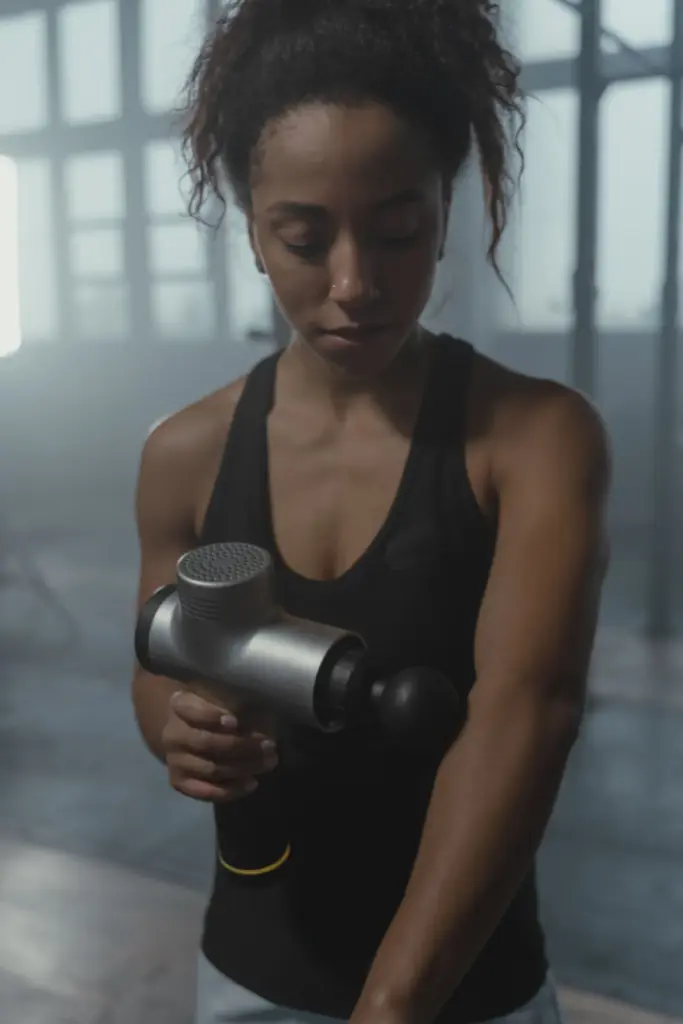
A massage gun can look like a simple answer to a complicated feeling: tight legs, an uncomfortable shoulder or muscles that seem reluctant to move after exercise. Its rapid pulses make the device feel active and powerful. That sensation, however, does not tell you what has changed in the tissue or whether using it suits your situation.
Before choosing a setting or booking a session that includes percussion, decide what you want from it. A comfortable experience and a short-term change in movement are different from treating an injury. Understanding that distinction makes the device easier to judge without expecting it to solve every muscular complaint.
Start with the reason you want to use one
Describe your aim in ordinary words. Perhaps you want to feel less stiff before a routine activity, or you enjoy the sensation of gentle mechanical massage. If your real question is why something hurts, a device cannot supply the answer. Avoid turning an unexplained symptom into a problem you feel obliged to work out with more pressure.
After exercise, the promise of rapid recovery deserves particular care. Our guide to sports massage and post-exercise soreness explains why comfort, readiness to train and improved performance need separate consideration. A pleasant sensation after percussion does not establish that an injury has healed or that harder training is appropriate.
What the research has actually measured
In a small study by Konrad and colleagues, sixteen healthy men received calf percussion or sat quietly. Ankle movement increased immediately after percussion; maximal muscle contraction did not improve. This is a useful finding about a specific measurement, rather than proof of broad recovery benefits.
A 2023 review of massage-gun research found limited, mostly short-term evidence, with concerns about study quality. Mobility findings were more encouraging than strength or performance findings. The studies also used different devices and methods.
When reading a claim, ask what was measured, in whom and for how long. Changes in a laboratory movement test cannot automatically become promises about pain, sporting results or everyday function. Research on one calf protocol does not provide instructions for an uncomfortable neck.
Pressure, settings and comfort
The number on a speed control is not a measure of how much benefit you will receive. Settings, attachments and the way a device is handled differ. There is no useful reason to chase the highest setting simply because the motor can deliver it.
Nor should pain be treated as a target. If the sensation becomes unpleasant, stop and reconsider what you are doing. A professional should welcome clear feedback rather than encourage you to endure it. You can read more about communicating about pressure and pain before any hands-on session.
Follow the instructions for the actual device. A duration or frequency used in an experiment is not an individual recommendation, and a demonstration on social media cannot assess your circumstances. Avoid copying a sequence merely because the person presenting it appears confident.
Areas and circumstances that need caution
A percussion device is not appropriate for every surface or situation. The research review advises avoiding sensitive areas, including the head and neck, and warns against repeated aggressive application. Do not improvise by pressing onto bones or working around vulnerable structures in an attempt to reach something “deep”.
An original case report describing neck use identified an arterial injury after repeated application. One report cannot establish how often an event occurs or prove that the device caused it. It does support taking cervical safety seriously rather than treating neck percussion as an ordinary self-care experiment.
Open wounds, recent injuries, altered sensation, relevant medication or an existing medical condition may change suitability. Discuss uncertainty with an appropriate healthcare professional. New or concerning symptoms after use, particularly changes in balance or neurological function, warrant prompt assessment rather than another application. The broader guide to when to adapt, postpone or seek assessment helps put that decision in context.
Give it a clear place in your routine
You do not need to add a device to every warm-up or recovery routine. Consider whether it contributes something you value and whether using it creates extra discomfort, expense or dependence on a ritual. There is no requirement to feel a dramatic sensation for an activity to be worthwhile.
If you already follow a healthcare or rehabilitation plan, ask how an additional device fits that plan before introducing it. The NCCIH overview of massage offers a useful broader principle: massage should not replace necessary medical care. It also explains that the evidence and risks vary.
Notice your experience without turning it into a diagnosis. Feeling different immediately afterwards is information about that moment. It does not establish a lasting benefit or create a reason to increase the dose next time.
If a professional includes percussion in a session
A device should have an explained purpose within an agreed appointment. Before it is introduced, ask a few direct questions:
- Why is percussion being suggested for my stated goal?
- What areas will be included, and which will be left alone?
- How will we change or stop it if I dislike the sensation?
- What information about my health or recent symptoms matters here?
- What suitable alternatives are available if I prefer no device?
The explanation should help you decide, without a claim that every client needs the same treatment. Compare relevant preparation through the Massage Alliance professional directory, and ask about experience with the service actually offered. A credential is useful context; it is not a guarantee of an outcome.
Questions people often ask
Does a massage gun remove muscle knots?
A tender or tight-feeling area does not identify a specific structure that must be broken up. Describe the sensation and any symptoms rather than assuming that stronger percussion will remove a physical knot.
Can it replace a massage appointment?
It offers a different experience. It cannot provide a conversation, assess your feedback independently or explain whether your concern needs another kind of help. You can prefer either option without assuming they are equivalent.
Should I keep going until the area feels numb?
No. Loss of sensation is not a useful goal for judging comfort. Stop if something feels wrong and seek advice about persistent or concerning changes. More intensity is not evidence of better care.