
To attract clients as a massage practitioner, organise three steps: help the right people find you, help them understand your service and make booking straightforward. Publishing more content only helps when those pieces work together.
A professional presence should show what you do, who it may suit, where you work and how a session unfolds. It should also make your training verifiable and the limits of your activity clear. From that foundation, you can combine local search, recommendations and content without depending on a single platform.
Define a service people can understand and book
Start with a specific description of your offering. Explain the session’s purpose, its duration, where it takes place and the full price. Use names the public understands and clarify technical terms where necessary.
For example, a wellbeing massage service can explain how pressure preferences and areas of work are agreed. That information helps people imagine the experience. A long list of techniques without explaining how to choose between them can leave the decision to someone unfamiliar with those differences.
Also clarify who the service is not suitable for and when you would recommend a healthcare assessment. Describe only training and competencies you can document. If you use a certification, identify the issuing organisation and its scope.
Prepare a short response to initial enquiries: what the session includes, availability, price and the next step for booking. Adapt it to each person without turning it into a long sales message. If a question comes up repeatedly, add the answer to your website.
Make sure your business appears accurately on Google
A Google Business Profile can help present a local business to people searching for services nearby. Google explains that local results mainly consider relevance, distance and prominence. Completing your information is useful; it does not guarantee a particular ranking.
Use the business’s real name, an appropriate category, current opening hours and consistent contact details. Include understandable services and your own photographs of the space and your professional presentation. Check on a mobile phone that the telephone number, location and booking link work.
The location must reflect how you work. If you only visit clients at home, review the guidelines for service-area businesses: you should specify your service area and hide an address where you do not receive clients. Do not create fictitious locations to appear in more towns.
Review the profile when you change opening hours, address or services. Someone who finds conflicting information has another question to resolve before booking. Make that step easier and keep your website, social media and directories consistent.
Build a website and content that help people decide
Your home page should quickly answer five questions: who provides the service, what they offer, where, how much it costs and how to book. Add information about training, the first visit and cancellation conditions. Check readability on a mobile phone and the steps needed to complete an enquiry.
For local search, connect each actual service with the area where you provide it. A useful page about wellbeing massage in your town should offer original information: access, premises, opening hours, arrangements and specific features. Creating many nearly identical pages with only the town name changed does not improve the information readers receive.
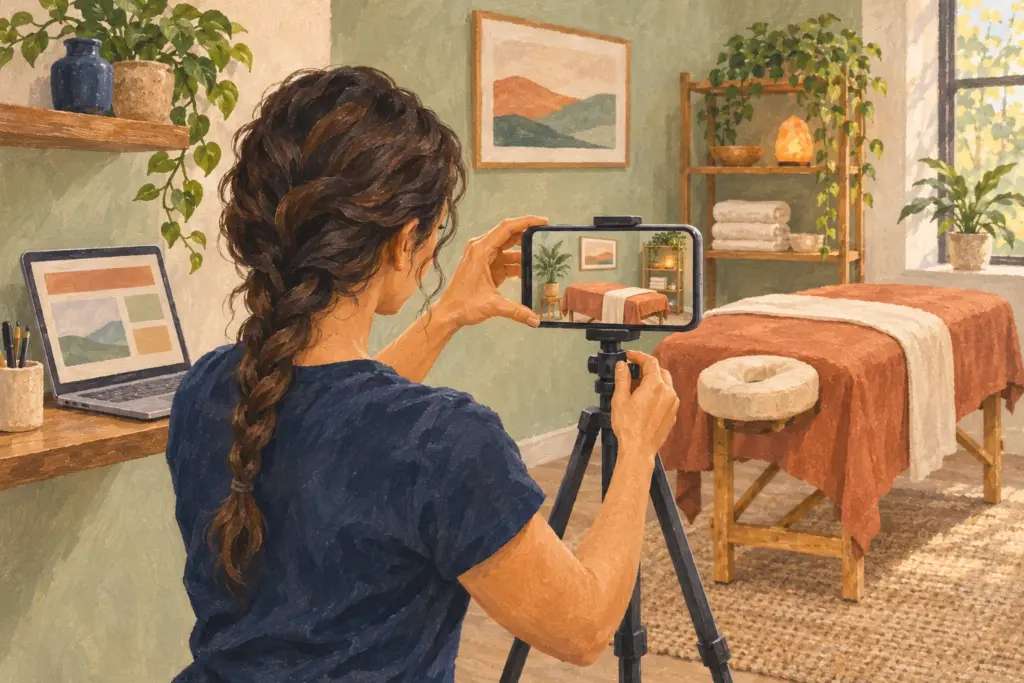
On social media, alternate answers to common questions with examples of how you work: preparing the room, explaining a session or studying to keep your skills up to date. If identifiable clients appear, arrange the appropriate permission for that use of their image beforehand.
Each piece of content needs a relevant next step. A video about a first visit can lead to the page explaining the session; a post about availability can lead to booking. Measuring that journey is more useful than judging every post solely by its views.
Request genuine reviews and respond discreetly
Reviews help others learn about real experiences. You can invite clients to share theirs freely, without imposing a rating or writing the text for them. A simple invitation might be: “If you would like to share your experience, you can leave a review here. Your feedback helps us improve.”
Google Maps policies prohibit incentivised reviews and selectively requesting positive opinions. Avoid discounts in exchange for ratings, filtering who receives the link according to satisfaction or pressuring someone to post while still on the premises.
Respond by thanking people for their time and addressing the comment. If someone leaves criticism, offer a private way to discuss what happened and review the service. Do not use a public reply to disclose health information, personal details or conversations from the session.
Look for recurring themes: punctuality, clear pricing, easy booking or feeling heard. As well as providing a public signal of trust, feedback can help you identify a specific improvement to your operations.
Build partnerships and respectful follow-up
Identify nearby businesses whose customers may be interested in your service: accommodation providers, sports centres or wellbeing venues. Prepare a short introduction explaining your activity, training, availability and conditions. A partnership starts with both parties understanding what they can honestly recommend.
Referrals should respond to the person’s needs. Avoid arrangements that push you to accept cases outside your competence or recommend unnecessary services. Do not exchange client lists. When information needs to be shared for a specific service, first review the lawful basis and limits of that disclosure.
For follow-up, distinguish messages needed to manage an appointment from promotions. As a relationship-building practice, you can ask whether the person wants to receive news and through which channel. The Spanish Data Protection Agency explains the conditions for electronic advertising and the right to object through a simple, free procedure; having a number saved does not authorise every type of message.
Make it easy for people who wish to book again, without presenting a frequency of visits as mandatory for everyone. Continued appointments should fit the preferences and goals agreed, without using anxiety or pressure to sell more sessions.
Measure actual bookings and improve one thing each week
Keep a simple record of where enquiries come from, how many become bookings and how many end in completed sessions. Asking “How did you hear about us?” can provide information that social media statistics miss. Collect only the data necessary for that measurement.
Also distinguish the cost of an enquiry from the cost of acquiring a client. In a fictional example, a €90 campaign generates 30 enquiries and three completed first sessions. Advertising costs €3 per enquiry but €30 per new client served. These are different measures; the calculation also excludes time spent responding and other costs.
Try one specific improvement before changing everything:
| Week | Suggested work | Check |
|---|---|---|
| 1 | Clarify services, duration, prices and location | Is the offering understandable without asking basic questions? |
| 2 | Review the website and booking process on a mobile phone | Can an enquiry be completed without errors? |
| 3 | Introduce yourself to potential partners and organise neutral invitations to leave reviews | Are there relevant conversations and freely given opinions? |
| 4 | Compare enquiries, bookings and sessions by channel | Which step needs improvement? |
This is a work plan, not a promise of results within a month. If enquiries have little connection to your activity, review the message. If people ask questions but do not book, examine clarity, availability and conditions. If they book but do not attend, review advance communication and your appointment policy.
To share these priorities with other professionals, explore Massage Alliance’s membership options and check the benefits available for your category.
Make your offer understandable to clients who speak other languages
An international presence starts with accurately explaining the same service in each language. Pay particular attention to words such as “therapy”, “clinical”, “rehabilitation” and professional titles: a marketing translation can imply competencies that your training or the destination’s rules do not allow you to claim. Describe what happens during the session, its duration and its limits in straightforward language.
Organise each website version around real questions: where you work, which languages you can use for the consultation, how to book and what happens if someone needs to cancel. Publishing a page in a language does not mean you can conduct a safety conversation in it; distinguish the two and offer a clear alternative when necessary.
For local search, Google requires an accurate representation of the real business and its address or service area. Translating your website does not justify inventing premises in another country or advertising travel you do not offer.
Before expanding campaigns, test the complete journey with a fluent speaker: from finding the service to understanding the price and receiving confirmation. Also seek local advice on privacy and marketing communications requirements. Measure relevant enquiries and completed bookings by language; a visit from abroad does not, by itself, establish an intention to book.
Review the promise before publishing the advertisement
A short copy review can make your offer both clearer and more responsible. Replace an impressive claim with something the reader can check:
- Instead of “eliminates back pain”, explain the purpose, duration and agreed limits of the wellbeing session.
- Instead of “the best internationally approved expert”, name the qualification, issuer and current credential that you can verify.
- Instead of “guaranteed results”, describe how preferences are discussed and how a client can raise a concern.
A testimonial or disclaimer does not establish an unproven health benefit. The EU guidance on unfair commercial practices addresses misleading claims and fake reviews; confirm the rules applying to your own market.
Keep permission for publicity separate
Before publishing an identifiable photograph or client story, define its purpose, channels and appropriate legal basis. A booking or consent to massage does not automatically permit advertising. The EDPB small-business guide explains the conditions for lawful processing. Keep permission records, provide a clear contact for questions and avoid disclosing health information in a public reply. When showing your premises, use photographs of the actual space; label illustrative images clearly.
Present your preparation clearly
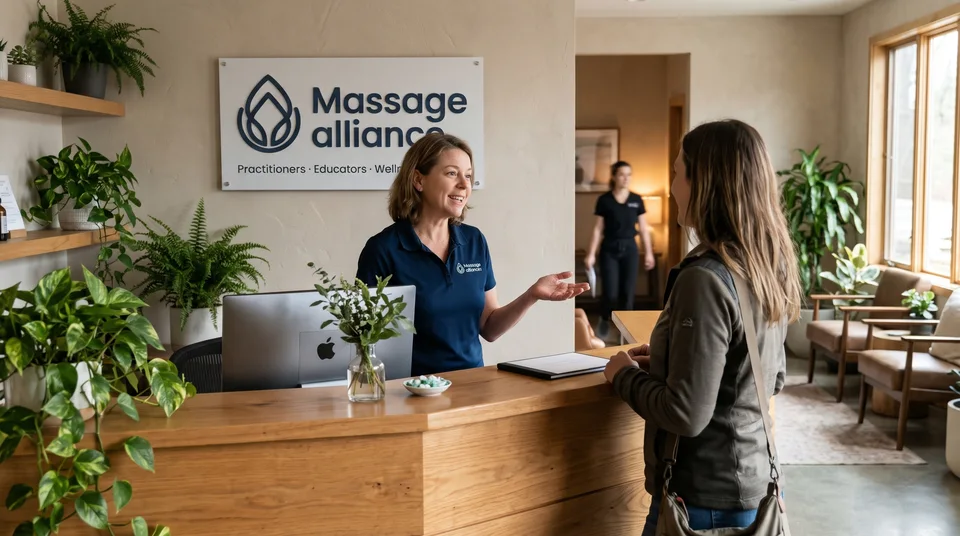
A professional presentation grows stronger when your training is understandable and your values are clear. Get to know Massage Alliance, its international outlook and its public recognition criteria. You can ask about membership and continuing education options to support your development. Tell us who your work serves and what you would like to learn as you consider your next steps. I would like information about joining.
Sources and further reading
- Google. Tips to improve your local ranking.
- Google. Guidelines for representing your business accurately.
- Google Maps. Prohibited and restricted content, reviews and fake engagement.
- Spanish Data Protection Agency. Unwanted advertising.
- Spanish Data Protection Agency. How to request consent.
- Google — Guidelines for representing your business