Hygiene in a massage room depends on a sequence of tasks that can be followed every day. A clean towel and a tidy room are visible; preparing the table, handling products and separating used materials from clean supplies need the same attention.
This article offers a starting point for organising wellbeing massage services. Each centre should adapt it to its activity, products, equipment instructions and applicable requirements. The international professional references cited offer good-practice guidance; they do not replace the rules applicable in Spain.
Organise the room and schedule before welcoming anyone
Start by mapping how supplies move: where a clean sheet comes from, where it goes after use and how it reaches the laundry. If those routes cross on the same chair or worktop, reorganise the space. The solution can be simple: protected storage, a dedicated container for used linens and a clear preparation surface.
The Public Health Ontario guide for personal services considers linens soiled after each client and requires covers to be changed between people. This is a useful reference for understanding why appearance alone does not determine whether an item can be used again.
Next, review bookings. If one session ends at eleven and the next begins at eleven, you have allocated zero minutes to preparing the space. Measure how long your full procedure takes and reserve that time. Include removing used items, completing hygiene tasks and getting the room ready, without relying on clients arriving late.
When several people work together, assign responsibilities explicitly. “We all clean it” does not clarify who checks the face cradle, replenishes towels or notices a product has run out.
Look after hand hygiene throughout the sequence
Contact with oil affects the choice of hand hygiene method. The CDC recommends soap and water when hands are visibly dirty or greasy: hand sanitiser does not work as well in those conditions. It also notes that sanitiser does not remove every microorganism or certain contaminants.
Include washing where it is actually needed rather than limiting it to a welcoming gesture. After finishing, you may touch used linens, the telephone or cleaning products before preparing fresh supplies. The sequence should allow you to have clean hands again before the next contact.
As a sector-specific reference, CMTO’s infection control standard in Ontario covers hand hygiene before and after interaction, after handling soiled linens and before handling clean linens. It is not presented here as a Spanish legal obligation, but as a professional criterion for reviewing the process.
Make it easy: when opening, check that soap, a suitable drying method and unobstructed access to the sink are available. Resolve anything missing before starting. A procedure that depends on searching for supplies halfway through the day is more likely to be interrupted.
Follow an order between sessions
Write down a sequence and practise it in the actual room. The following table can serve as an operational draft. Adapt it to the centre’s products, materials and risk assessment.
| Step | Action | Useful check |
|---|---|---|
| Remove | Place used linens and materials in their containers | No items from the previous session remain |
| Clean | Remove dirt and residues with a suitable product | Surfaces are ready for the next step |
| Disinfect | Follow the planned procedure for contact surfaces | Product, compatibility and contact time follow the label |
| Prepare | With clean hands, lay out fresh linens and supplies | Clean items stay separate from used ones |
| Check | Confirm that the room is ready | Equipment, consumables and schedule are prepared |
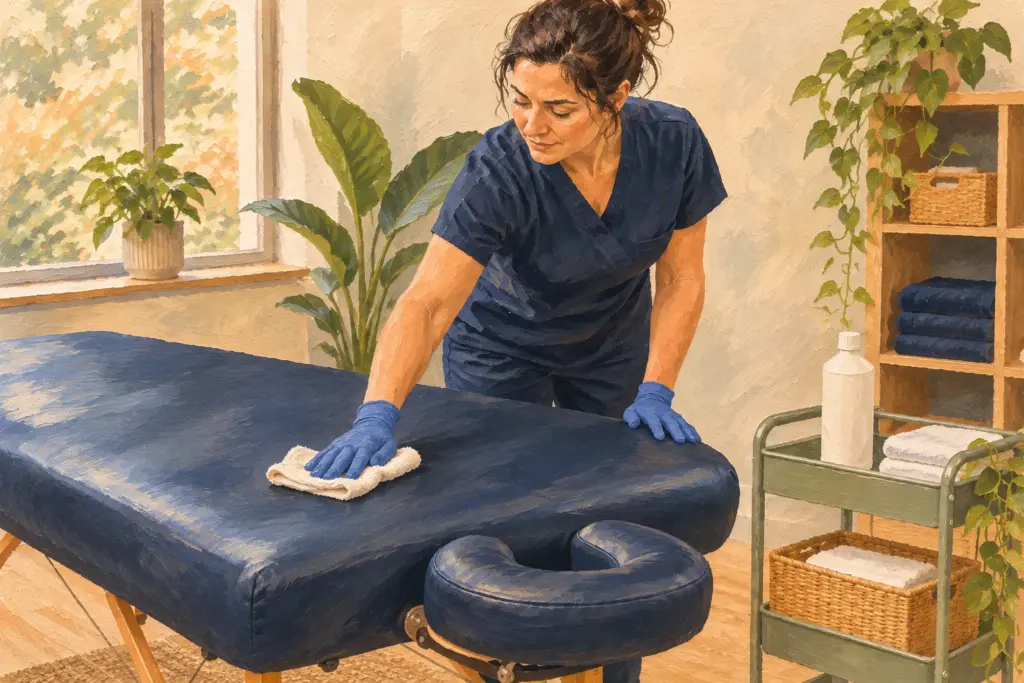
CMTO includes cleaning and disinfecting the table, face cradle, contact surfaces and equipment between clients. Also consider objects you touch while working: a remote control, height adjustment lever or dispenser may be missed by a check focused only on the centre of the table.
The CDC distinguishes cleaning from disinfection and recommends respecting product compatibility and contact time. Wiping and immediately drying may fail to follow the instructions. No single contact time works for every disinfectant.
Manage linens from use to storage
Plan quantities around how your centre actually operates. If a session needs several items, count them all: covering the table does not, by itself, address the face cradle, pillows or the client’s covering. Define what is changed and how each item is processed.
For washing, follow a procedure compatible with the fabrics and suitable for your activity’s requirements. The CDC’s general guidance for facilities advises the warmest appropriate water setting and complete drying. That does not justify imposing the same temperature on every fabric, machine or centre.
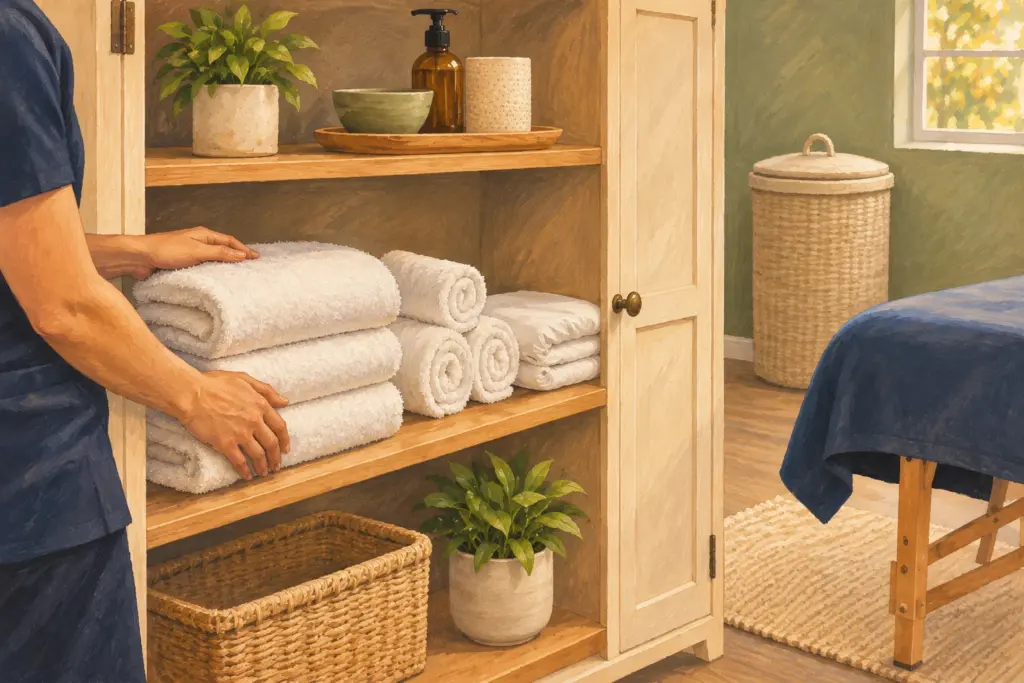
Store ready-to-use items so they do not contact used ones. If you outsource laundry, agree collection, delivery and separation; if you wash on site, establish a clear route for each stage. Whoever restocks should be able to identify what is ready without asking.
One organisational example is to prepare the sets needed for the day plus a reserve based on actual use. For a week, note when supplies run short or unprocessed items accumulate. That observation helps adjust purchasing and schedules without improvising during an appointment.
Review products and reusable equipment
Oil is part of the service and needs its own management. The Spanish Agency of Medicines and Medical Devices (AEMPS) recommends following instructions and use periods, storing containers correctly and avoiding transfers not intended by the manufacturer. Include those checks in routine restocking.
Keep cleaning instructions for every reusable tool and decide who follows them. Before buying an accessory, ask how it is processed between people and whether that procedure fits your work. Its commercial appeal does not resolve the maintenance it requires.
Pay attention to the equipment’s physical condition. A damaged covering or a part that is difficult to dismantle deserves review before continued use. The decision may be to repair, replace or temporarily remove the item, depending on its condition and the manufacturer’s instructions.
Keep a short list: item name, procedure, compatible product and responsible person. It will be more useful than a long document no one consults. Update it when changing a product; two similar-looking containers can have different instructions.
Check that the procedure works during a real working day
Choose a day and observe a complete transition between clients. Is there space for removed items? Is the product’s required contact time respected? Does the person preparing the room know what is missing? This review seeks specific improvements, rather than a general impression that everything looks clean.
Keep a record proportionate to the activity, with tasks, frequency and responsibility, and a simple way to report problems. If supplies were missing or equipment could not be prepared, there must be a clear decision before reuse. Review the process when staffing, equipment or the type of service changes.
Hygiene is taught through demonstration and practice. You can consult Massage Alliance’s verification, assessment and quality criteria and use this guide to identify areas to strengthen within your team. A good procedure can be explained, followed and reviewed.
Adapt the protocol to the products and premises at your destination
When changing centres or countries, translating the cleaning checklist is not enough. Review the actual surfaces, water supply, laundry facilities, ventilation and available products. A protocol that depends on materials unavailable there needs adapting before you receive clients.
Use a sheet for each product recording its exact name, intended use, dilution where applicable, contact time and precautions. Avoid substituting a similarly named product without checking its instructions. In the United States, for example, the EPA instructs users to check a disinfectant’s label for authorised uses and contact time. A US reference does not, by itself, establish that the product is authorised in another market.
Ask the centre manager about local requirements and how to handle any waste or contaminated materials the activity may produce. Do not add healthcare procedures unrelated to your service or improvise product mixtures to make them “stronger”.
Test the adaptation with a simulation between sessions: who removes linen, where used items go, who replenishes materials and how long the complete process takes. If several practitioners share a room and speak different languages, use clear instructions and a practical demonstration. Recording the product used provides specific information for reviewing an incident.
Include hygiene in your professional development
The care you take of your treatment room reflects your approach to your profession. To keep developing a responsible practice, discover Massage Alliance’s community, its public recognition criteria and its continuing learning options. Tell us about your experience and which procedures you want to improve; you can enquire about membership conditions and available training to plan your next step with more information. I would like information about joining.
Sources and further reading
- Public Health Ontario: infection prevention and control in personal service settings.
- CDC: hand hygiene and hand sanitiser use.
- CMTO: safety and infection control, Ontario.
- CDC: cleaning and disinfecting facilities.
- AEMPS: good practices for cosmetic product use.
- US EPA — Selected EPA-Registered Disinfectants